Wildlife in Lauterbrunnen

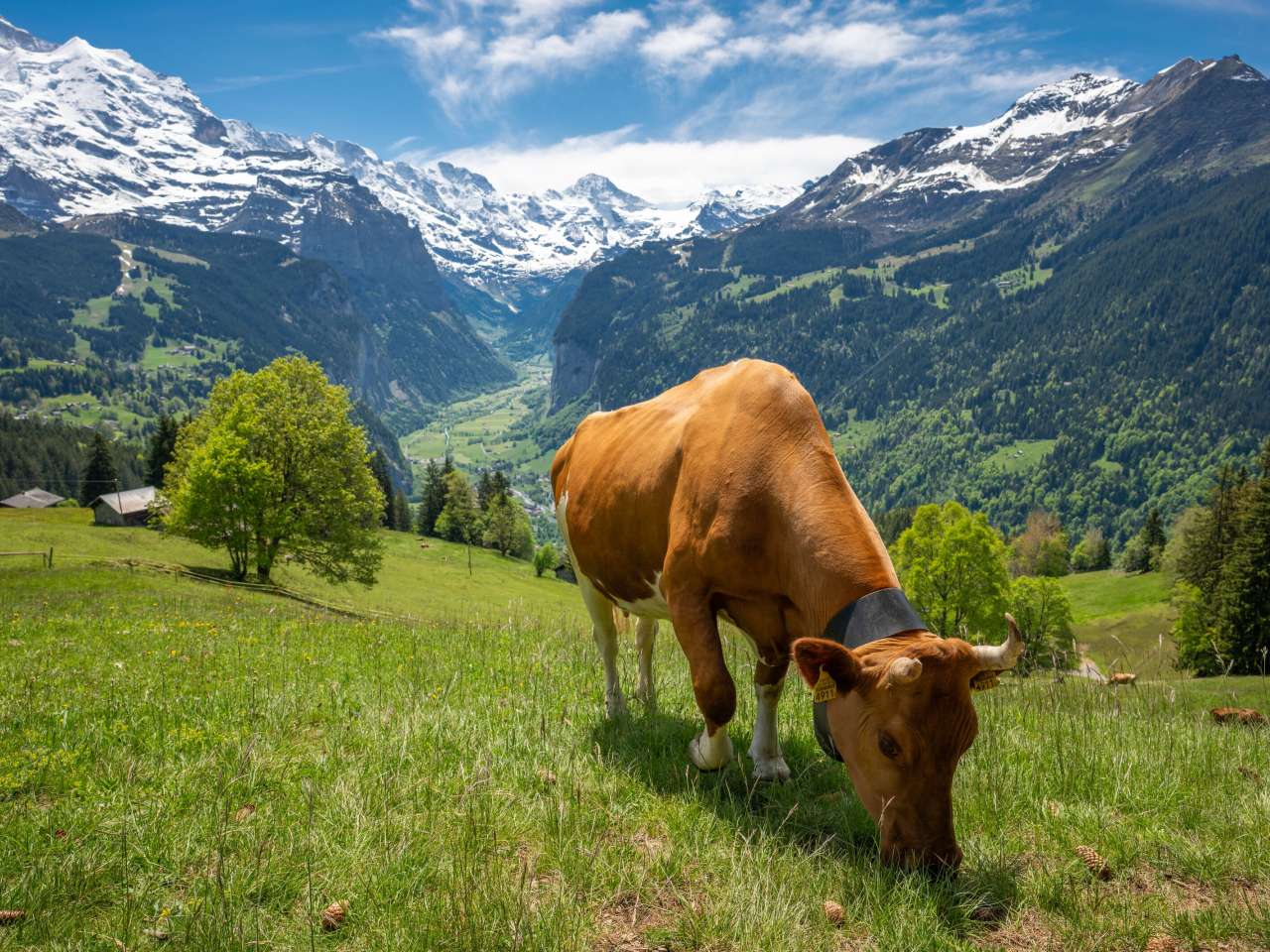
The cow takes a break from eating and looks curiously at the camera. The summer mountain panorama can be seen on the horizon.

Nestled between steep rock faces, thundering waterfalls and alpine meadows, Lauterbrunnen offers a unique wildlife experience in the heart of the Bernese Oberland.

Animal Discovery Trail

Discover the unique wildlife of the Lauterbrunnen Valley on the Animal Trail. The route begins at the River Lounge and follows the Lütschine towards Stechelberg before ending at the Spiss barbecue area.

Along the way, several information boards introduce visitors to the native wildlife of the Swiss Alps and share interesting facts about their habitat, behaviour and way of life. Keep your eyes open and discover the wooden animals carved along the trail.

Note

Come visit us at the Tourist Office Lauterbrunnen to pick up the flyer, complete the quiz on the trail and pick up your prize!
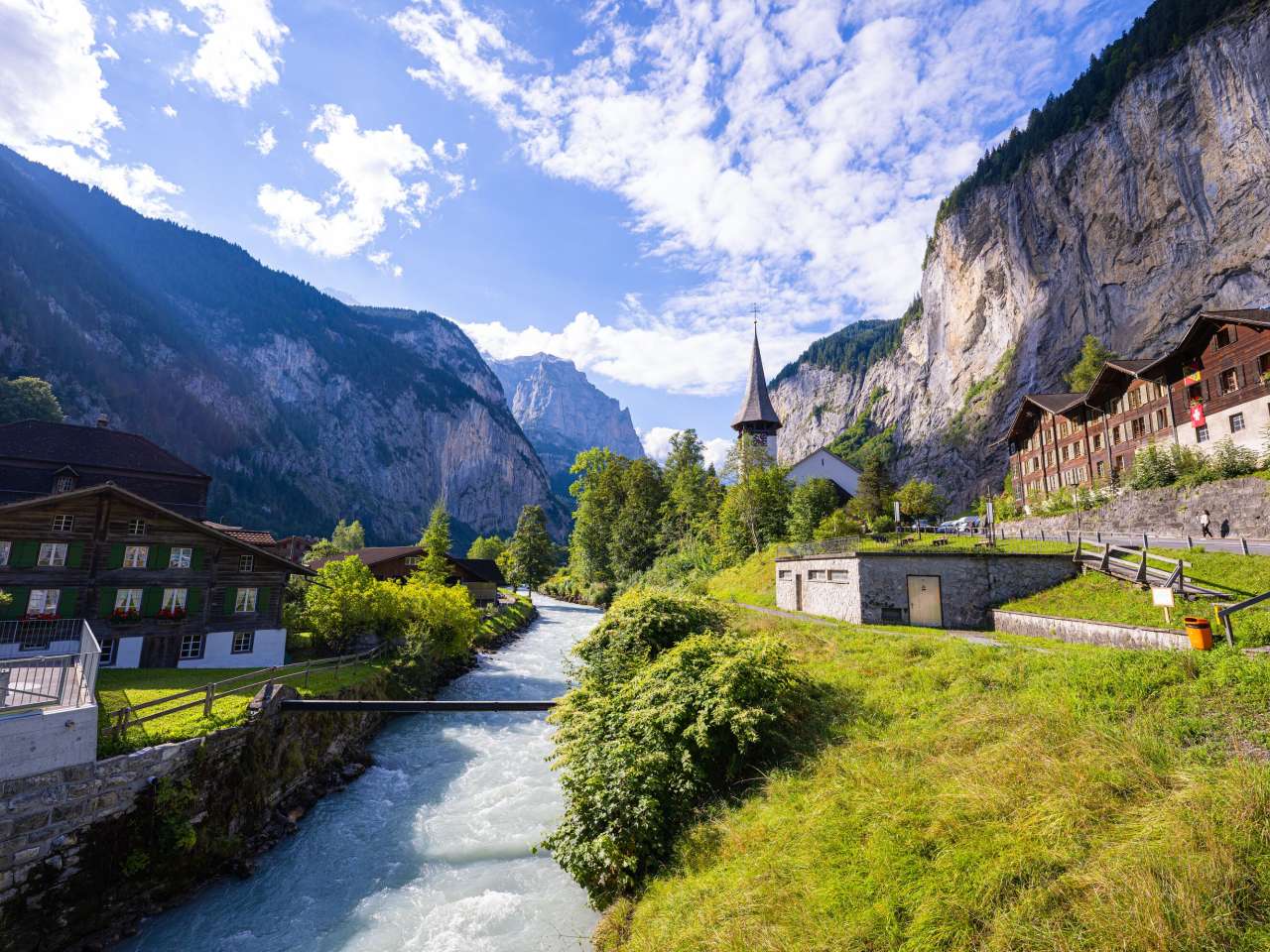
The Lütschine River flows through the village of Lauterbrunnen. The church stands next to the river, nestled between the steep cliffs of the Lauterbrunnen Valley.
© Jungfrau Region Tourism AG. CC0 (OpenData)

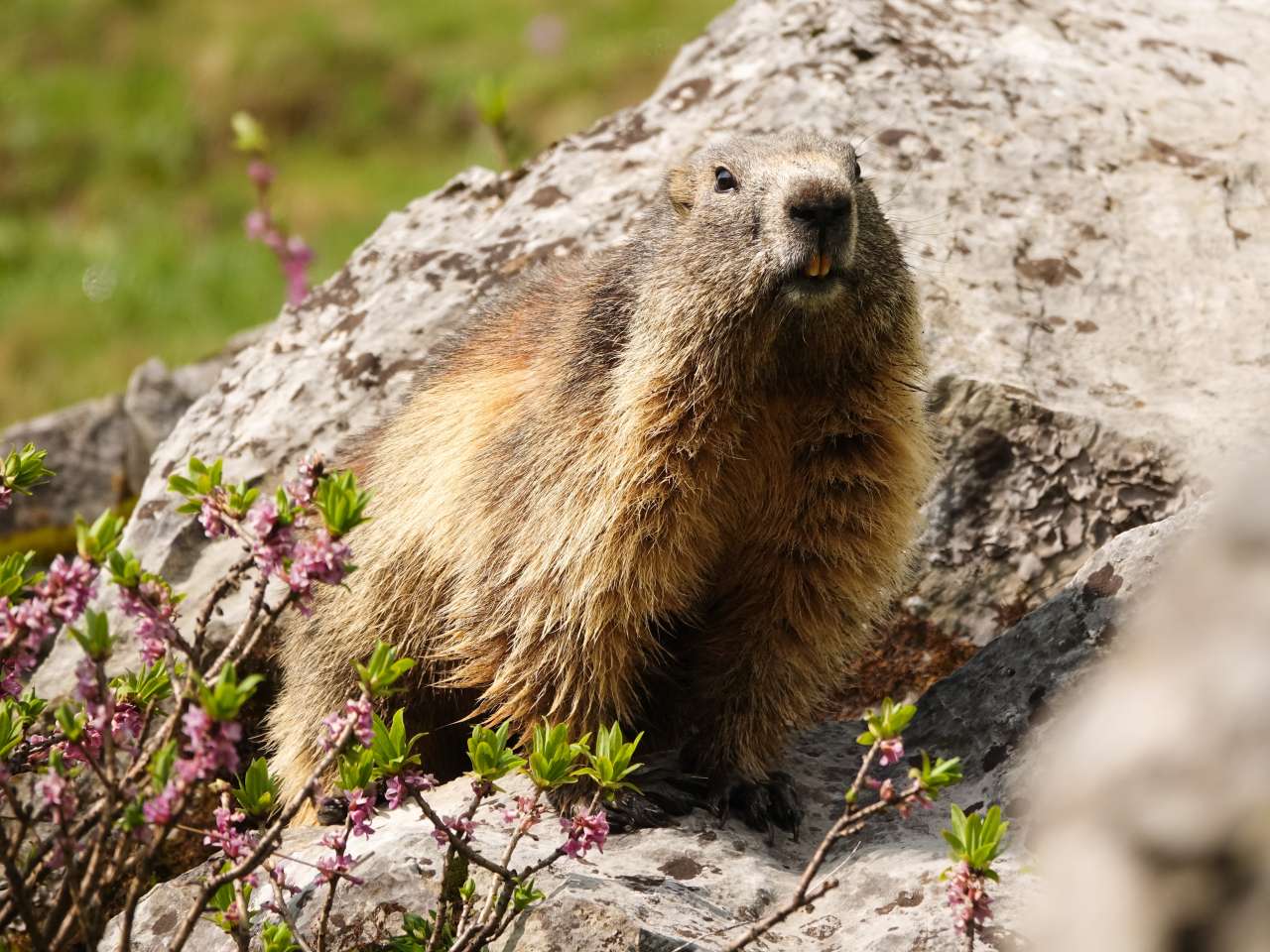
Alpine Marmot

Marmots, often called ‘Mungg’ in Swiss German, belong to the rodent order and the squirrel family. The alpine marmot is the third largest rodent in Europe after the beaver and the southern Italian porcupine. Marmots hibernate in their burrows during winter, but do not sleep through the whole season. Despite having a greatly reduced metabolism, they must empty their bladder every few weeks. Marmots have an excellent sense of when spring is beginning; this is still inexplicable to us humans. They always appear as soon as the first patches of pale ground appear. The timing varies slightly from year to year, but in very long winters, they can emerge up to a month later.
©unsplash

Alpine Marmot
Habitat:

Grass steppes from the tree line with maximum altitudes of 3000 metres above sea level.They favour the southern slopes of the mountains as these are the first to be free of snow in spring. They build their burrows in the ground, with the winter burrow reaching depths of up to seven metres.

Life form:

Marmots are very social creatures, they live in family groups of up to twenty animals, each consisting of a dominant pair and their offspring.

Food:

Roots, tubers, grasses, herbs, shoots, flowers, seeds and fruit. Adult marmots eat up to 1.2 kg of green mass per day

Mating season:

Marmots mate directly after hibernation, typically between mid-April and the end of May.

Population:

Around 130 000 animals live in the wild in Switzerland. Their population is considered stable. In Switzerland it is allowed to hunt them.

Reproduction:

After a gestation period of around 34 days, the female gives birth to up to six young. Marmots become pregnant approximately every two years.

Observation in the region:

Marmots can be found on Männlichen, at Eigergletscher and Grindelwald First.

Enemies:

Golden eagles pose the greatest threat to adult marmots. Foxes, stone martens and ravens can also pose a threat to young animals. When a marmot spots an enemy, it lets out a shrill whistle to alert the others.

Nice to know:

Alpine marmots hibernate from October to April. Before hibernating, they line their nest chambers with dry plant material to insulate them from the cold.

Natural hazards:

Snowstorms and long periods of bad weather can be fatal for young animals if they do not have enough fat reserves. The same applies to hibernation; some animals do not survive it for the same reasons.

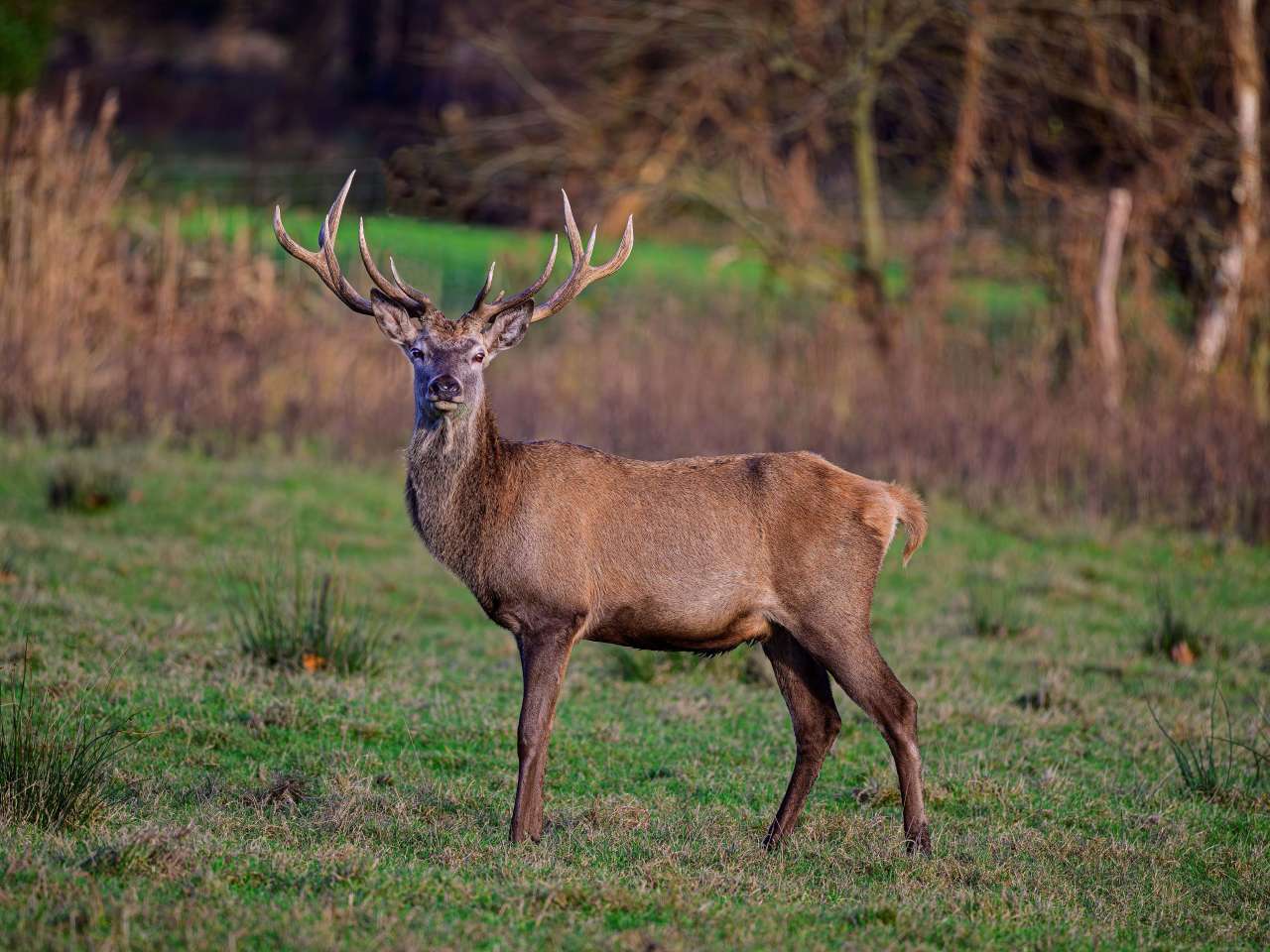
Red Deer

The red deer, also called “king of the woods” is the largest of our native wild animals. It belongs to the family of cloven-hoofed animals, whose relatives include fallow deer, roe deer, and elk. Male stags have antlers that can weigh up to 8 kg. These are shed every year between February and April, after which they are regrown. Females do not have antlers and are significantly smaller than males. Red deer were once extinct in Switzerland. From 1870, the first deer immigrated again from Austria. Since the 1990s, they have also recolonised parts of the Jura from France. Their comeback is not yet complete, however, as there are still large areas of Switzerland that are mostly free of deer. Unfortunately, deer corridors are often blocked by motorways, preventing the animals from spreading further.

Red Deer
Habitat:

Forest and open or semi-open landscapes. During winter on semi-open areas in valleys; in summer on alpine pastures. Red Deer are long-distance migrants, and their summer and winter habitats may be far apart.

Lifestyle:

Outside the mating season, hinds and stags live separately. Old stags are solitary creatures. In summer, the hinds and their calves form a family, several of these families come together in winter to form a herd. The herds are led by a lead cow.

Food:

Grasses, leaves, bark, buds and twigs. They need up to 20 kg of food per day.

Mating season:

Autumn; male stags make rutting cries during this time, not only but also to attract the females. They go to the rutting grounds, where they meet the female deer. There, the bulls engage in fights and mating rituals.

Population:

About 35 000 red deer live in Switzerland. They are not considered endangered and may be hunted.

Reproduction:

As a rule, the hind gives birth to a calf after around 230 days of gestation. The young can stand within a few hours of birth. They are suckled for at least six months.

Observation in the region:

In the Upper Lauterbrunnen Valley, Beatenberg, Habkern and during winter near Meiringen. They are very shy, which is why they are rarely seen and difficult to observe.

Enemies:

Large predators such as wolves, which hunt old and injured animals. Eagles, eagle owls, lynxes and wildcats rarely catch a young animal.

Nice to know:

Red deer become nocturnal if their habitat is disturbed too much by humans. They only have a red coat in summer; in autumn, they change their coat and become grey or grey-brown.

Natural hazards:

Snow avalanches, human disturbance in winter and the destruction and fragmentation of habitats caused by agriculture, road construction, hiking trails and ski resorts.
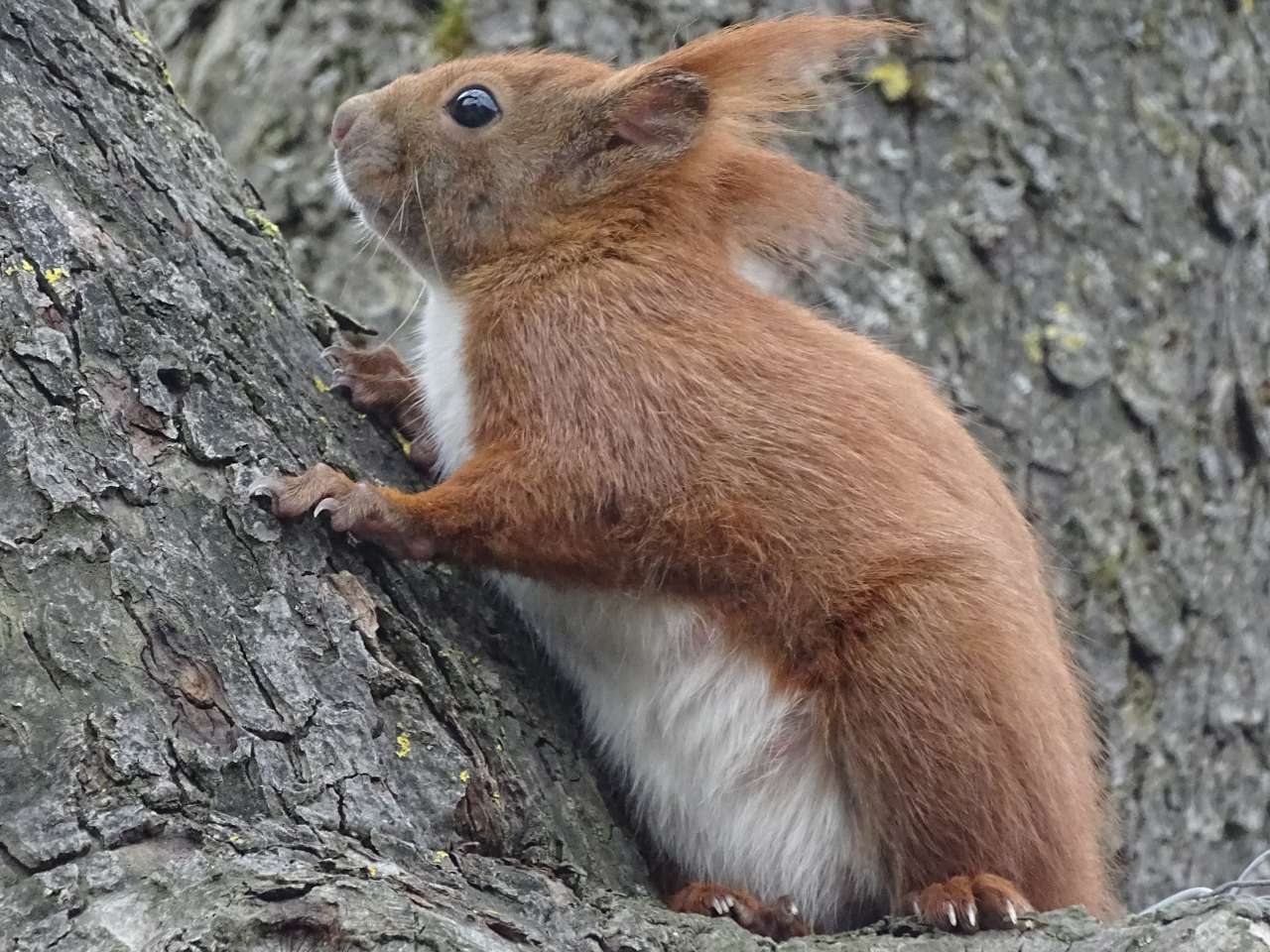
Eurasian Squirrel

The European squirrel belongs to the tree squirrel family. Contrary to one prediction, it is not endangered in Switzerland. In the UK, native squirrels were displaced by American grey squirrels. This led to the assumption that the same would happen in the rest of Europe. However, this forecast did not consider pine martens, nearly extinct in the UK they are still present in mainland Europe. Here, pine martens and European squirrels coexist; the squirrels build their nests at heights, on thin branches difficult for the martens to access. Grey squirrels, on the other hand, nest closer to the ground, making them easy prey for martens. This is why they have not yet spread in this country.
A very good example how a healthy ecosystem and biodiversity regulates and protects itself.

Eurasian Squirrel
Habitat:

Woodlands; preferably coniferous and mixed woods, up to higher altitudes. Sometimes also found in parks and gardens.

Lifestyle:

The squirrels build dome-shaped nests out of twigs, leaves and moss, which they construct high up in the forks of trees. They are mainly solitary, only coming together to breed. They reach a maximum age of up to 6 years.

Food:

Conifer seeds, beech nuts, hazelnuts, walnuts, acorns, berries, mushrooms, bird eggs and young birds. Squirrels create many hiding places with food, for the winter months.

Mating season:

December to March. During the mating season, several males and one female engage in wild mating hunts.

Population:

Squirrels are widespread, but they are not found in large numbers anywhere. They are not considered endangered in Switzerland, although their numbers have declined significantly in recent decades. They are protected in Switzerland.

Reproduction:

After mating, the female is pregnant for about 40 days, giving birth to an average of four young per litter. The young leave the nest for the first time at around six weeks and are suckled for ten weeks. The female is solely responsible for raising the young.

Observation in the region:

Squirrels are active during the day and are easy to spot. They can be seen all over the
region, also in the villages

Enemies:

Humans, hawks, pine martens, ravens and grey squirrels.

Nice to know:

Their bushy tail fulfils two important functions: it acts as a counterweight when balancing, sitting, running and jumping and it keeps them warm when sleeping.

Natural hazards:

Climate change, parasites such as ticks, fleas, mites and worms. Forests that are heavily divided by roads. Monotonous forests in terms of tree species and age can lead to food shortages.

Chamois

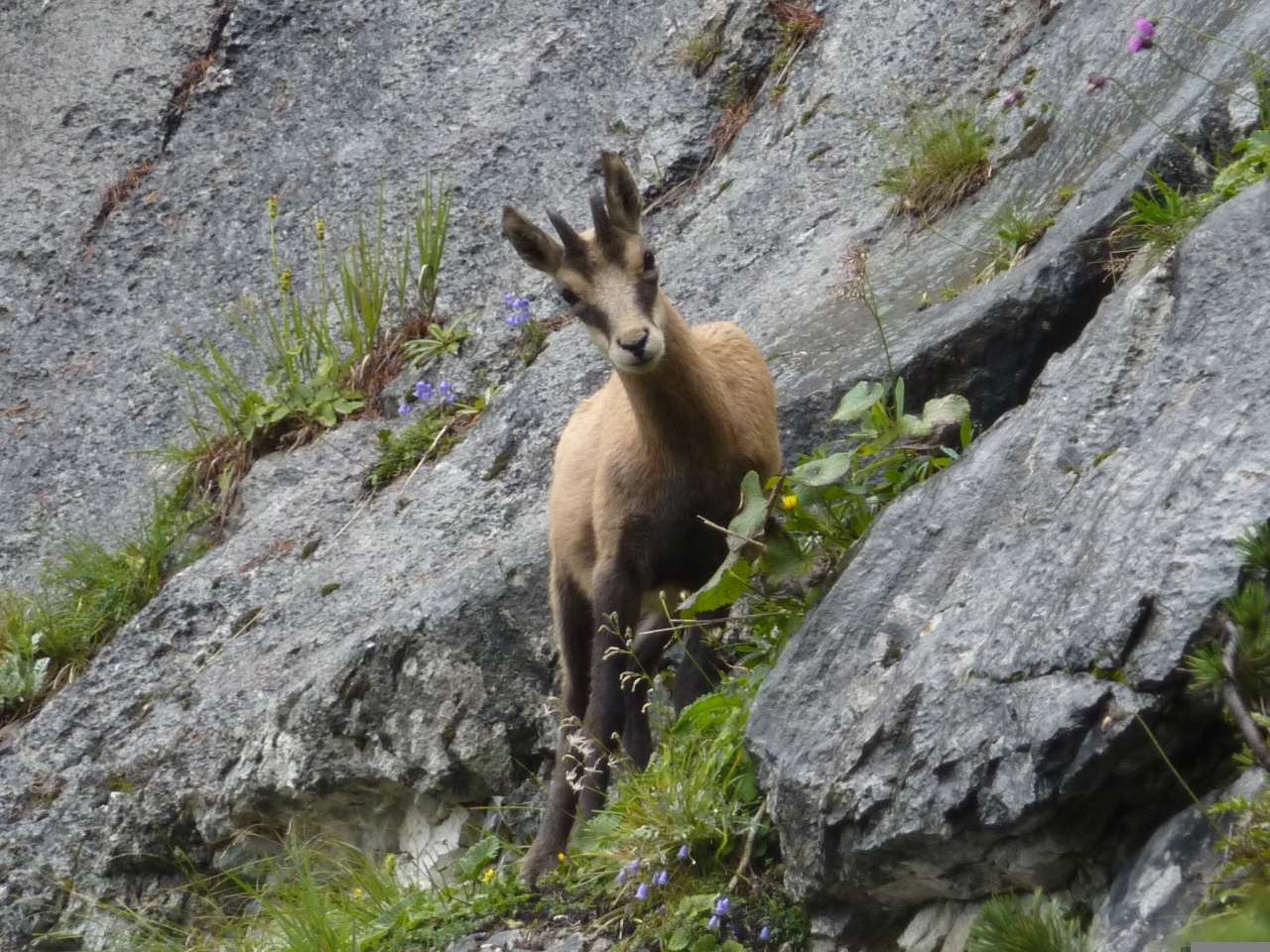
Like the ibex, chamois belong to the goat genus. Unlike the latter, chamois have never been wiped out in Switzerland. They have a particularly striking face; it is white with two dark stripes running from the base of the horns to the mouth. Their hooves give them an excellent grip on rocky terrain and make them excellent climbers.

Chamois
Habitat:

Alpine plateaus, rocky areas and forests. They prefer temperatures below 12 °C / 53.6 °F .

Lifestyle:

Females and young ones live in herds of 15 to 30 animals. Bucks, however, live solitary lives.

Food:

Grasses, herbs and green parts of perennials, shrubs and trees.

Breeding season:

November and December

Population:

The chamois population in Switzerland is not considered endangered, but it has been declining steadily over the past years

Reproduction:

Females are pregnant for 21 weeks. Chamois fawns suckle from their mother for up to 6 months

Observation in the region:

They can be found throughout the region, at higher or lower altitudes depending on the season.

Enemies:

Humans, golden eagles, lynx, wolf and bear. The last three are only found in very small numbers in Switzerland. Golden Eagles occasionally catch a fawn.

Nice to know:

Climate change and an increase in leisure activities and tourism are disturbing the animals and putting them under stress. This negatively impacts their condition and likelihood

Natural Hazards:

Avalanches, stonefall and lack of food.

Cows Alpine economy

In early summer, dairymen take their cattle up to the mountain pastures, where the animals spend the summer. Alpine farming is steeped in tradition and plays a vital role in Swiss agriculture. The alpine pastures in the Lauterbrunnen Valley are home to dairy cows, young cattle and suckler cows. In autumn, the herds return to the valley during the festive Alpabzug, with the animals decked out in festive finery and the herdsmen in traditional costume. There are several alpine pastures in the Lauterbrunnen Valley, including Suls, Saus, Pletschen, Winteregg, Sefina and Wengernalp.

Cow in Wengen with a view of the Lauterbrunnen Valley
© SYLVIA MICHEL. CC0 (OpenData)
Cows Alpine economy
Fun fact:

In summer, you can sometimes see cows being transported by helicopter on ropes. This is usually a serious matter, as most of these flights are rescue missions for injured animals.

Nice to know:

Cows wear bells on the pastures to be found more easily by their farmers. E. g. at night, in fog or in remote valleys. During the winter months, cows are usually kept in barns with a small outdoor area in front.

Reproduction:

Just like humans, cows carry their young for about nine months. Like us, they only produce milk after giving birth to a calf. Since the amount of milk produced decreases over time after giving birth, dairy cows are inseminated once a year on average.

Food:

Cows are pure herbivores. They eat grasses, herbs and clover. In stables, they are given hay, silage and concentrated feed. They require 16 kg to 20 kg of food per day. Cows are ruminants, which means that when they rest, they regurgitate what they have eaten to further break down the particles, which ultimately aids the digestive process. Cows also drink up to 100 litres of water a day.

Senses:

Cows have an extremely keen sense of smell; they can smell much better than they can see. Their spatial and colour vision is less pronounced than that of humans. This means they need a little longer to recognise what is approaching them. Therefore, one should always move slowly and with awareness when dealing with cows. They find it difficult to understand fast movement and often label it as dangerous. A reason why cows often see dogs as a threat.

How to behave in pastures with cows:

When walking through pastures with cows, move slowly and keep as much distance as possible. Speak calmly so the animals notice you. Do not approach or touch the cows. If cows come towards you, stay calm and do not run away. Instead, stand still, make yourself look bigger by raising your arms or hiking poles, speak loudly, and slowly back away while facing the animals.

Cows are very social beings:

They live in small herds of 20 to 30 animals and form close friendships with one another. Licking each other strengthens their relationships and has a relaxing effect.

Cow breeds:

There is not just one type of cow; there are many different breeds. Among others the following are widespread in Switzerland: Simmentalervieh, Braunvieh, Swiss Fleckvieh, Holstein and Hérens. Cows weigh between 500 kg and 800 kg on average when fully grown. Bulls weigh between 1000 kg&1500 kg. The natural life expectancy of a cow is around 20 years. However, dairy cows in Switzerland often live for an average of just 5 to 6 years.

Golden Eagle

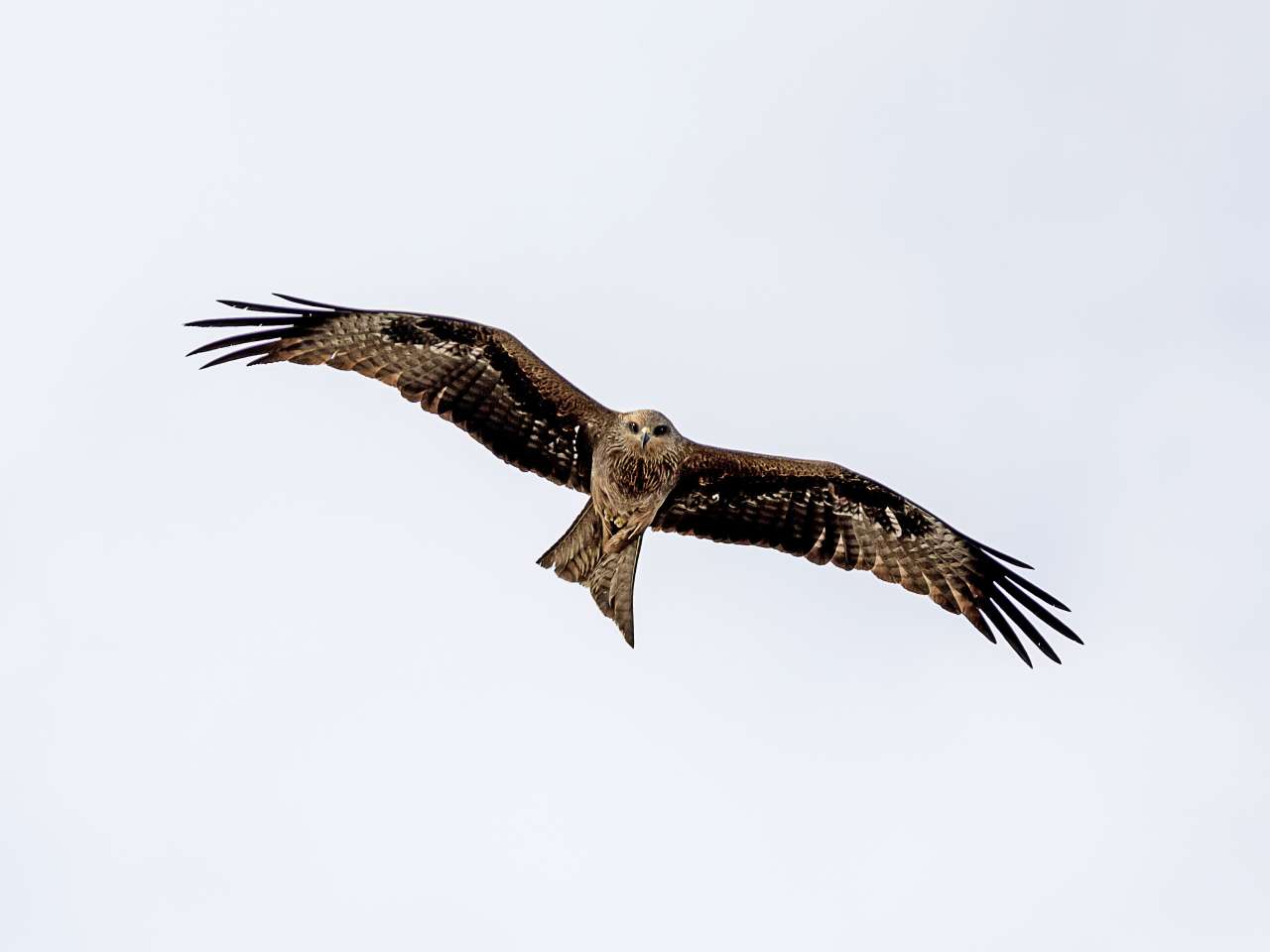
The golden eagle – also known as the ‘king of the skies’ – is one of the world’s largest birds of prey. It is the only large predator in Switzerland to have survived the persecution of hunters and poisoned bait without being wiped out. Today, the bird’s population has recovered significantly, with the Swiss Alps now considered fully colonised. Nevertheless, the golden eagle is still listed as ‘potentially endangered’. This is due to a relatively high number of single eagles disturbing the breeding behaviour of pairs in their territories, leading to breeding failures

Golden Eagle
Habitat:

High mountains, preferably above the tree line, on slopes and walls.

Lifestyle:

Golden eagles live in monogamous pairs. They work together to defend their territory against other golden eagles. Their life expectancy is approximately 35 years.

Food:

Mammals and birds, depending on the habitat mainly marmots, hares and grouse.

Mating season:

January and February.

Population:

Around a quarter of the total population of golden eagles in the Alps live in Switzerland. There are approximately 350 to 360 breeding pairs

Reproduction:

Between March and April, the female lays two eggs, occasionally one or three. The incubation period lasts 43 to 45 days. The young birds reach flight maturity within 74 to 80 days

Observation in the region:

With a bit of luck, you might see them soaring or gliding above Stechelberg, at the Schilthorn, the Upper Lauterbrunnen Valley, Grindelwald First and Männlichen

Enemies:

Humans; drones and paragliders invading their airspace. Some birds are also still being illegally hunted and killed. Other birds of prey, such as vultures, eagles and ravens.

Nice to know:

They have golden-yellow heads and strikingly long, broad wings with a span of up to 2.2 meters.

Natural hazards:

Weather; hail, storms and heavy rain can pose a danger to the animals.

Alpine ibex

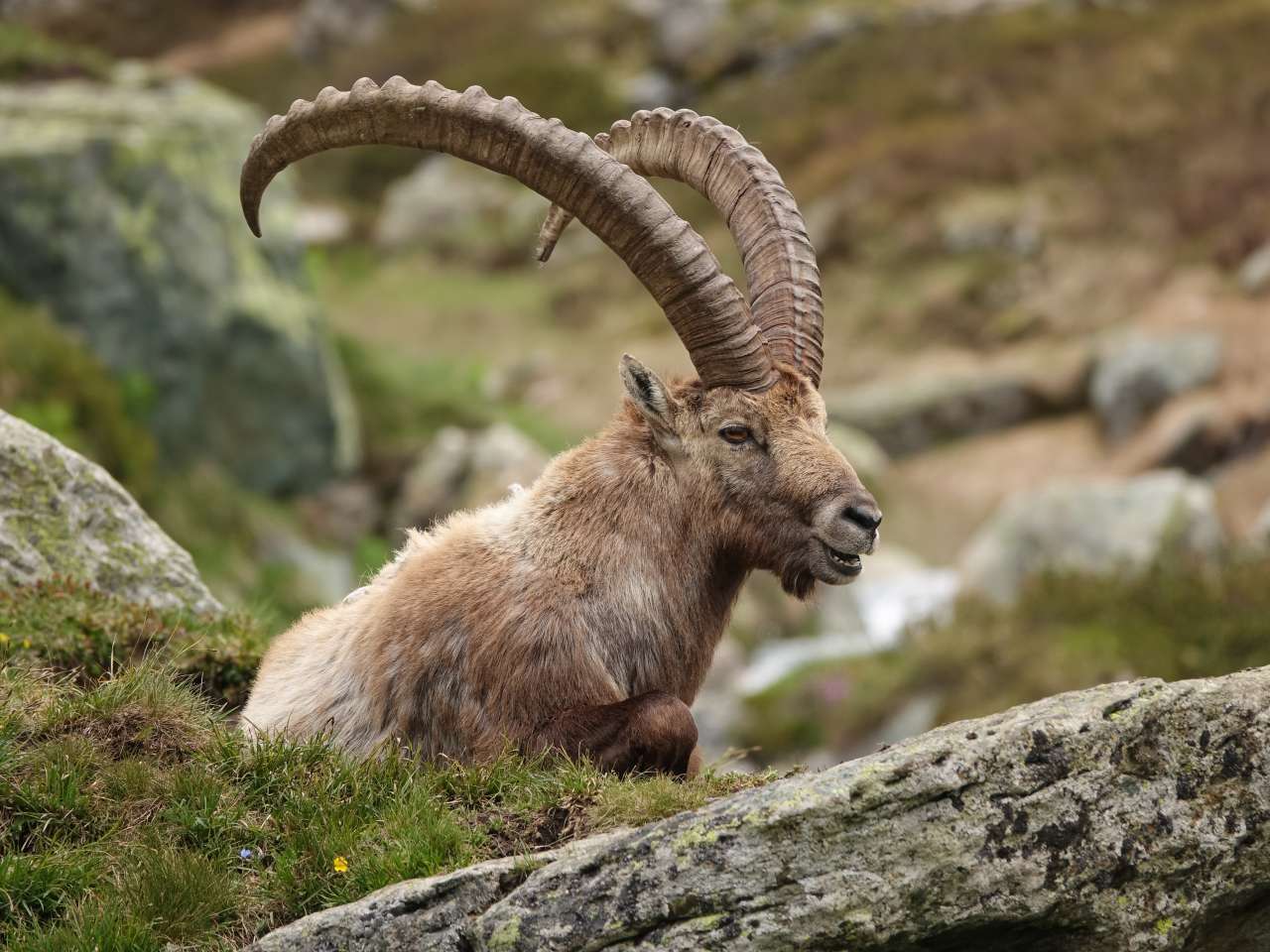
Ibexes, ‘the kings of the Alps’ belong to the goat genus like the chamois. Around 17 000 ibexes live in Switzerland today, which is no mean feat given that the animals were once hunted to extinction. The last ibex was shot in Valais in 1809. However, it is thanks to King Vittorio Emanuele II of Savoy that this species was not completely wiped out. He imposed strict protection regulations for the animals. How the ibex returned to Switzerland is an interesting story; Swiss authorities hired poachers to smuggle ibex fawns back into the country. All the Alpine ibex in the Alps today originate from the Aosta Valley area, which is leading to increasing problems as genetic diversity is low. The consequences of this high rate of inbreeding are lower body weight, reduced horn length, and an increased risk of parasite infestation.

Alpine ibex
Habitat:

Between the forest and the ice line. Found at altitudes of up to 3500 meters. During winter, found at lower altitudes than during summer.

Lifestyle:

Ibexes are social herd animals. Outside the mating season, males and females live in separate herds.

Food:

Grasses, herbs, lichens, shoots and buds of young shrubs and trees. In winter, dry grass and cushion plants. Ibexes are ruminants.

Reproduction:

Females carry their young for five to six months and give birth to one or two young. The young aresuckled by their mothers for up to a year. Ibex mothers share responsibility for rearing the young.

Population:

The ibex is protected in Switzerland, but hunting is permitted to control the population size.

Mating season:

December and January.

Observation in the region:

Upper Lauterbrunnen Valley, Wengen and Eigerglacier
Natural Hazards: Habitat shrinkage due to climate change and human activities; low genetic diversity.

Nice to know:

An ibex can live for up to 20 years. Like goats, ibexes can bleat, and they whistle to warn of danger.

Enemies:

Wolves, bears and lynxes. However, as there are hardly any wolves or lynxes left in Switzerland and almost no bears, they have few natural enemies apart from humans. Young or sick animals may fall prey to vultures, eagles or ravens.

Eurasian lynx

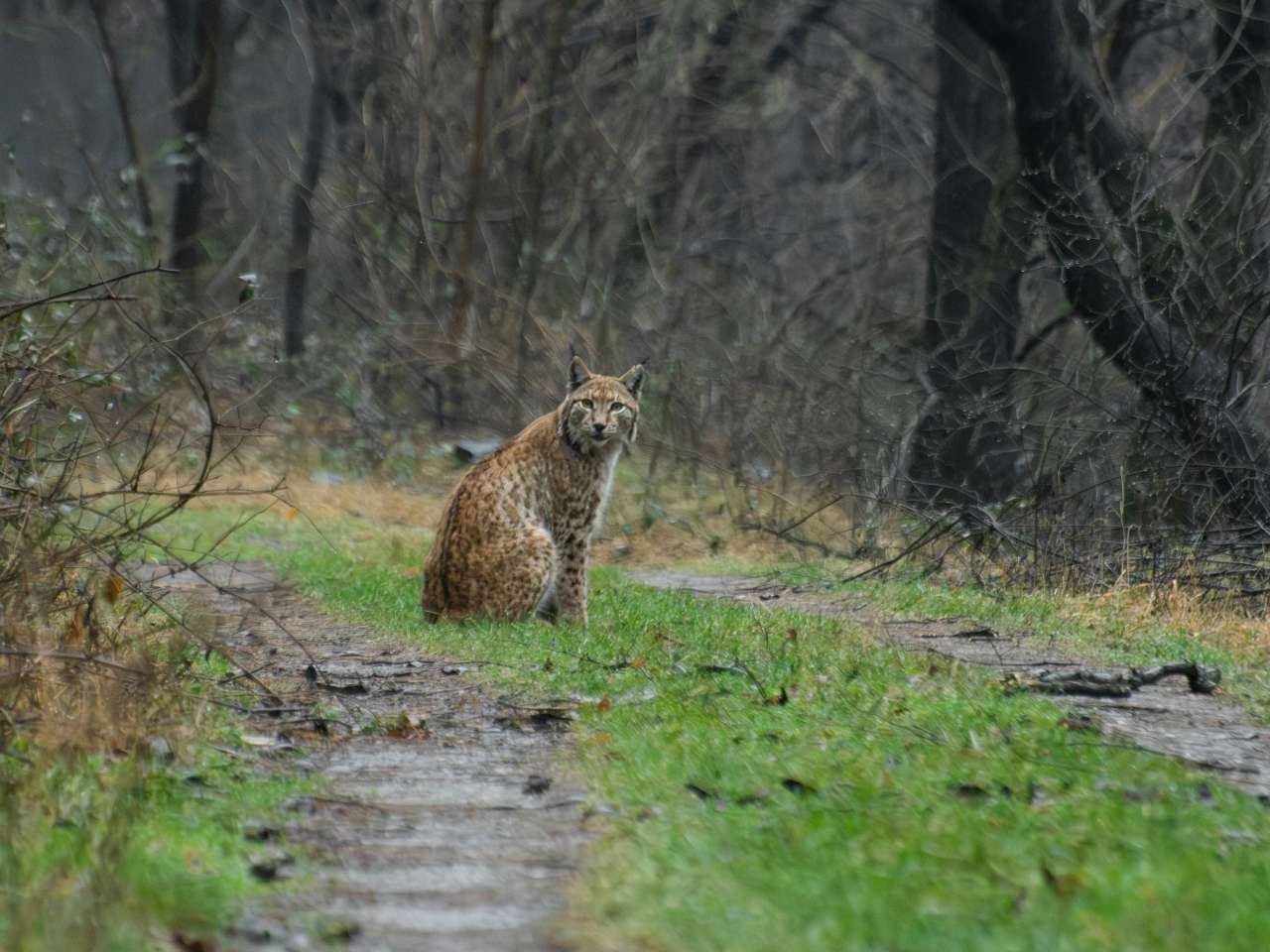
The Eurasian lynx is the largest European cat. It became extinct in Switzerland during the 19th century, with the last sighting recorded in 1904. However, the reforestation of forests and the return of wild ungulates in the 20th century created the necessary ecological conditions for reintroduction. In 1971, the first pairs of lynx were released in the canton of Obwalden, further releases followed in the Jura. Since then, three populations have developed in Switzerland. However, all these lynx descend from just a few animals, which has led to genetic impoverishment and the negative consequences of inbreeding. Lynx are classified as endangered in Switzerland. It is estimated that a continuous population of around 1’000 animals in the Alps would ensure their long-term survival. Currently, the populations do not inhabit neighbouring areas. Given their current amount, genetic makeup and situation, the survival of these animals in Switzerland is not guaranteed

Eurasian lynx
Habitat:

Lynx live in forests and increasingly also at higher altitudes, where they make use of more open habitats. Natural hazards: Snow avalanches, human disturbance in winter and the destruction and fragmentation of habitats caused by agriculture, road construction, hiking trails and ski resorts.
Lifestyle:

Lynx are predominantly nocturnal. Apart from females with cubs, they are solitary animals. They do not tolerate any other adult of the same sex within their territory.

Food:

Roe deer, chamois, hares and snow hares, foxes, marmots, birds, and fish.

Mating season:

The mating season runs from March to mid-April and is known as the rutting season. During this period, lynx communicate with loud, intense yowls. They also become active during the day.

Population:

According to estimates by the KORA Foundation, there are around 340 lynx in Switzerland.Lynx are a protected species in Switzerland. However, if the lynx reduces the local population of wild ungulates to such an extent that hunting is no longer possible, the lynx population may be culled.

Reproduction:

After a gestation period of 68–73 days, the female lynx gives birth to an average of two cubs. The cubs stay with their mother for around 10 months, after which they leave her and set out to find their own territory.

Observe in the region:

The Kandertal is home to the largest population in the Bernese Oberland. Anyone hoping to spot a lynx will need patience and luck; the animals are extremely shy and very well camouflaged

Enemies:

Humans - despite their protected status, lynx are still illegally hunted in Switzerland.

Nice to know:

Attacks on livestock, particularly sheep and goats, are locally and limited in time, mainly when regional game populations are low. Lynx pose no danger to humans.

Natural hazards:

Roads, housing estates, bodies of water and high mountains pose dangers to the animals and often act as barriers they cannot cross. Only around a quarter of all lynx reach adulthood.

©unsplash

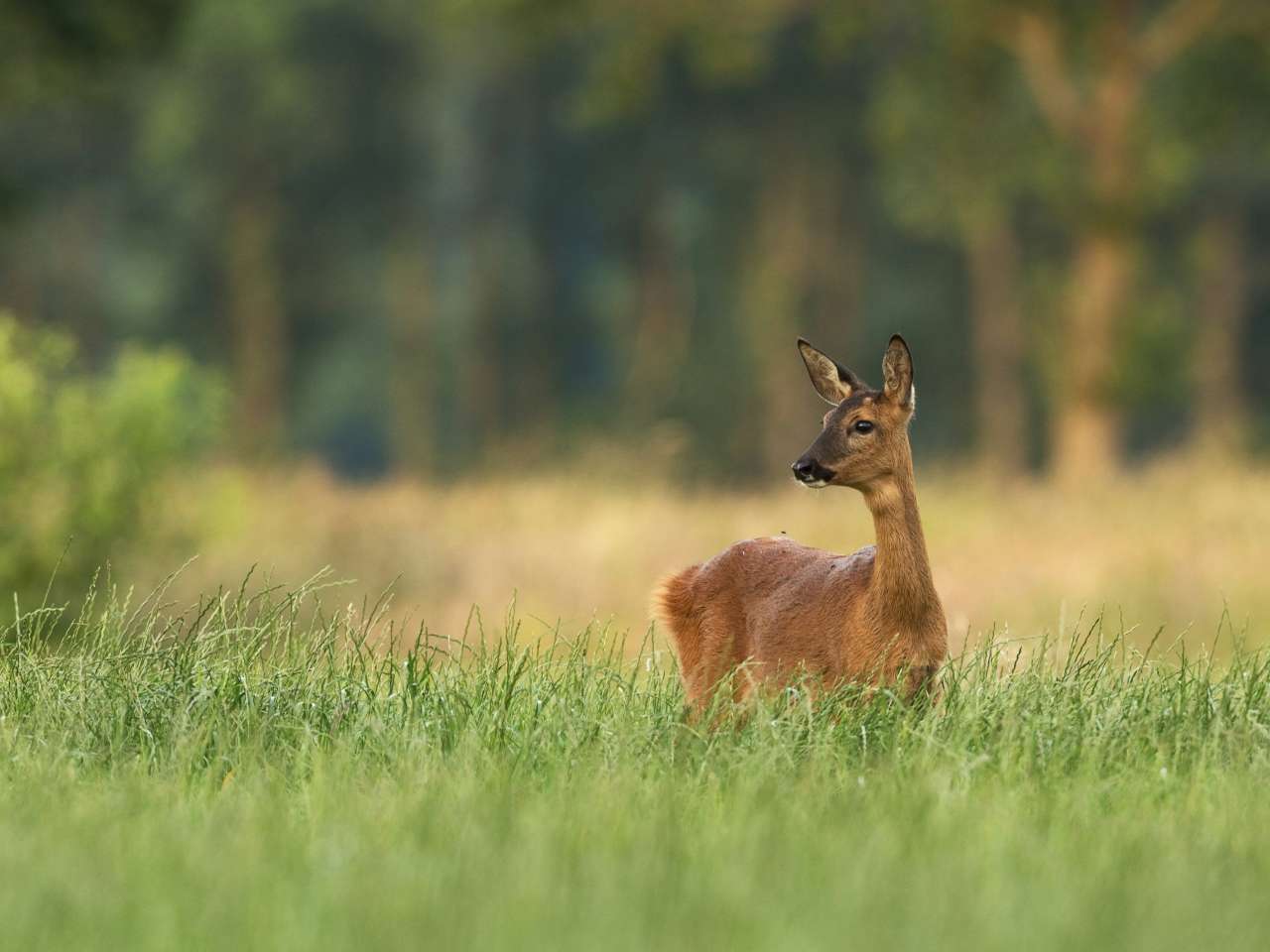
Roe deer

Roe deer are the smallest and most widespread wild ungulates in Switzerland. It remains unclear whether they were ever completely or nearly wiped out in this country, today however their population has recovered and is considered stable to increasing. The coat of roe deer changes with the seasons: reddish-brown in summer and grey-brown in
winter. A distinctive light rump patch stands out year-round, serving both as a warning signal in case of danger and as an indicator of their sex; heart-shaped in females and kidney-shaped in males. Males also carry small antlers. Fawns are marked with white spots that provide effective camouflage. Like many wild species in Switzerland, roe deer suffer from reduced genetic diversity due to fragmented habitats. Infrastructure such as motorways and railways limits natural movement, restricting gene flow between deer-populations and increasing the risk of inbreeding, which threatens their long-term health and adaptability.

©unsplash

Roe deer
Habitat:

Wooded areas from the lowlands up to the tree line; in summer, also regionally above the tree line and in adjacent meadows.

Lifestyle:

Roe deer are usually solitary or live in small groups. In autumn and winter, they often gather in larger groups. They are mainly active at dusk and at night.

Food:

Protein-rich herbs, grasses, perennials, shrubs, and trees – roe deer are very fussy eaters and don’t simply munch on a tuft of grass.

Mating season:

The so-called rutting season begins around mid-July and lasts until mid-August. During this time, the males engage in fierce battles over their territories.

Population:

The roe deer population in Switzerland is estimated at around 140’000. The animals may be hunted, with around 40’000 being killed by hunters each year; in addition, several thousand roe deer are killed each year in road traffic accidents and by mowers. They are protected only in the canton of Geneva where the hunting act prohibits recreational hunting.

Reproduction:

The females have a gestation period of around 9 to 10 months and give birth to an average of two fawns. They leave the fawns in meadows for the first days, to hide them from foxes and wild boars. Unfortunately, the fawns often fall victim to farmers’ mowers; when danger threatens, the young remain motionless in the grass.

Observation in the region:

In and around forests, throughout the Jungfrau Region, mostly in meadows on the edge of the woods. They can sometimes be spotted from the gondolas.

Predators:

Wolves, foxes, birds of prey, lynx and wild boars are natural predators of roe deer; they pose a particular threat to fawns.

Nice to know:

If you come across a fawn in a meadow, you must never touch it with your bare hands. The fawns are deliberately left there by their mothers, who will find them again. The young are naturally odourless; if a human touches them, they take on that person’s scent which makes them detectable to predators

Natural hazards:

: Harsh winters with deep snow, predators, extreme weather events. The greatest threat, however, comes from humans – through road traffic, mowers, hunting, and dogs.